
Importance of Frozen Shrimp Meat Texture Analysis
Frozen Shrimp Meat quality is highly dependent on its texture, which affects consumer satisfaction and product performance. Using a Frozen food texture analyzer, manufacturers can accurately measure key attributes such as firmness, cohesiveness, and chewiness. Reliable texture data ensures consistency across batches and helps meet industry standards.
Texture Profile Analysis for Frozen Shrimp Meat
Texture profile analysis (TPA) is a widely used method for evaluating the mechanical properties of frozen seafood. The analyzer simulates chewing and provides quantitative data on Frozen product Texture Analysis. Parameters such as hardness, springiness, and resilience are critical for assessing the eating quality of Frozen Shrimp Meat. TPA allows quality control teams to detect deviations early, ensuring product integrity and optimal texture.
How a Frozen Food Texture Analyzer Works
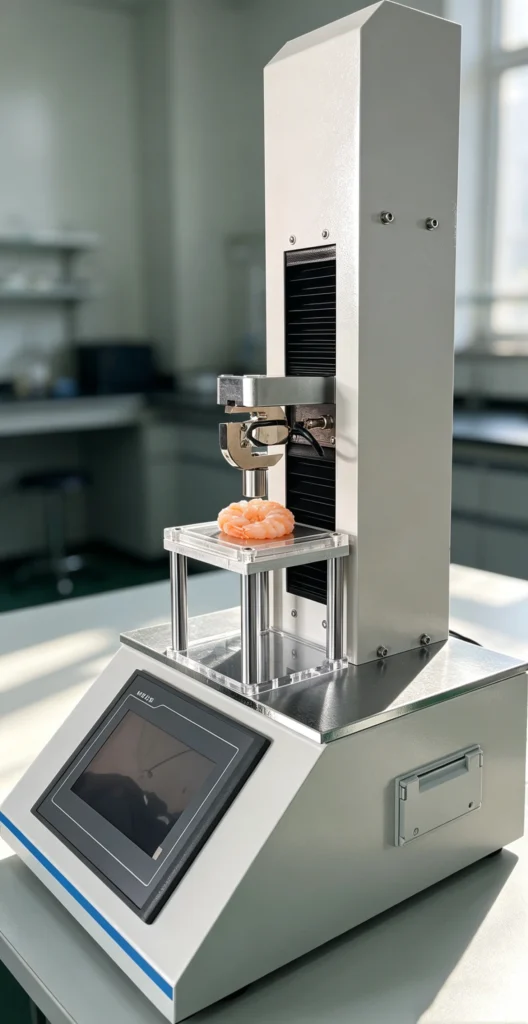
A Frozen food texture analyzer like the Cell Instruments TEX-01 applies controlled forces using specialized probes. For shrimp meat, a cylindrical or spherical probe measures the resistance to compression, mimicking consumer biting. The analyzer can perform multiple tests, including penetration, compression, and tensile tests, providing a comprehensive view of the texture. Temperature-controlled setups maintain the frozen state, preventing thawing that could affect measurements.
Benefits of Using a Texture Analyzer in Frozen Product Texture Analysis
- Consistency and Accuracy – Ensures uniform product evaluation and reduces variability between batches.
- Rapid Testing – Multiple samples can be tested quickly, supporting high-throughput production environments.
- Detailed Data – Quantitative analysis of texture parameters helps in product development and quality assurance.
- Predicting Consumer Experience – Understanding firmness, chewiness, and cohesiveness allows producers to tailor texture to consumer expectations.
Key Factors Affecting Frozen Shrimp Meat Texture
Several factors influence the texture of frozen shrimp:
- Freezing Rate – Rapid freezing prevents large ice crystals, preserving cell integrity and firmness.
- Storage Temperature – Fluctuating temperatures can cause partial thawing, negatively impacting chewiness.
- Shrimp Size and Species – Different species have varied muscle structure, affecting texture.
- Processing Methods – Boiling, peeling, and pre-treatment impact firmness and resilience.
Standardized Procedures and ISO Compliance
Performing Frozen product Texture Analysis according to international standards ensures consistency and credibility. Laboratories often refer to ISO guidelines for frozen seafood testing to standardize probe selection, test speed, and sample preparation. Following standardized procedures enhances the reproducibility of texture measurements and supports quality certification for export markets.
Applications of Frozen Shrimp Meat Texture Analysis
- Quality Control – Detects deviations in firmness or texture during production.
- Product Development – Helps create shrimp products with the desired chewiness and mouthfeel.
- Shelf-life Studies – Measures how freezing and storage affect the texture over time.
- Supplier Assessment – Ensures raw shrimp meat meets texture specifications before processing.
- Consumer Sensory Correlation – Correlates mechanical texture data with sensory testing, improving product acceptance.
Tips for Accurate Frozen Shrimp Texture Testing
- Always keep samples at consistent frozen temperatures during testing.
- Use proper probe types for small or irregularly shaped shrimp.
- Calibrate the texture analyzer before conducting batches of tests.
- Avoid repeated testing on the same sample to prevent thawing artifacts.
- Record ambient conditions such as humidity and temperature, as they may affect results.
Why Choose the Cell Instruments TEX-01 Texture Analyzer
The Cell Instruments TEX-01 provides precise, reproducible, and easy-to-use testing for Frozen Shrimp Meat. It supports multiple test modes including TPA, compression, and penetration. Its temperature-controlled capabilities make it ideal for frozen seafood, allowing manufacturers to confidently perform Frozen product Texture Analysis without thawing errors. Investing in this high-quality Frozen food texture analyzer ensures product consistency, supports regulatory compliance, enhances consumer satisfaction, and helps businesses maintain a competitive edge in the frozen seafood market.
FAQs
Q1: Why is texture testing important for frozen shrimp meat?
Texture affects the eating quality and consumer acceptance of frozen shrimp meat. Testing ensures consistent product standards.
Q2: Can a texture analyzer test both frozen and thawed shrimp?
Yes, but maintaining proper frozen conditions is essential for accurate results in Frozen product Texture Analysis.
Q3: What parameters does texture profile analysis provide?
TPA measures hardness, cohesiveness, springiness, chewiness, and resilience, which are crucial for evaluating shrimp meat texture.