
Frozen Food Texture Analysis & Machine
Frozen Food Texture Analyzer
Accurate Testing for Frozen Products
About Us
Frozen Food Texture Analyzer
Integrating frozen food texture analyzers into production lines enables real-time monitoring and feedback. By analyzing trends in firmness, hardness, and texture profile analysis (TPA) parameters, manufacturers can identify deviations early, optimize recipes, and reduce waste. Digital records and batch comparison allow manufacturers to maintain consistent product quality and ensure compliance with internal and regulatory standards.
Why Frozen Food Texture Analysis Is Essential
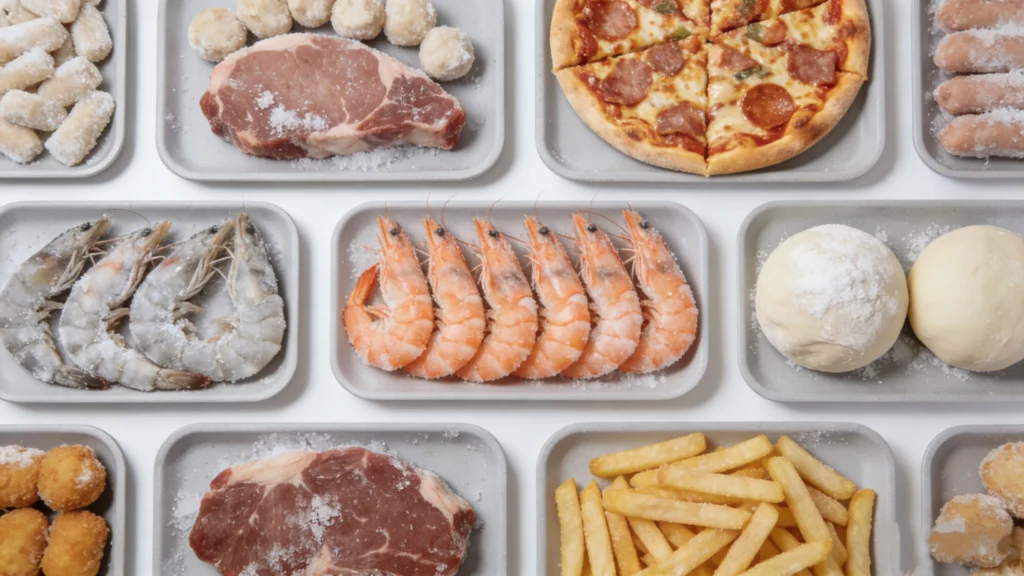
Frozen food texture analysis is crucial for ensuring product quality, consumer satisfaction, and brand consistency. Freezing and storage can alter the structure of ingredients, leading to changes in firmness, chewiness, or gel strength. By systematically measuring texture parameters, manufacturers can:
- Detect textural degradation due to freezing or thawing processes.
- Ensure uniform quality across batches for large-scale production.
- Optimize packaging and freezing protocols to maintain desired sensory qualities.
- Meet regulatory and labeling requirements for texture-related claims.
This proactive approach not only enhances the eating experience but also reduces product returns, consumer complaints, and waste, making it an indispensable part of modern frozen food quality control.
Data-Driven Quality Control in Frozen Food Production
Integrating frozen food texture analyzers into production lines enables real-time monitoring and feedback. By analyzing trends in firmness, hardness, and texture profile analysis (TPA) parameters, manufacturers can identify deviations early, optimize recipes, and reduce waste. Digital records and batch comparison allow manufacturers to maintain consistent product quality and ensure compliance with internal and regulatory standards.


Enhancing Consumer Experience Through Texture Analysis
Consumer perception of frozen foods heavily depends on texture attributes such as tenderness, crispness, and chewiness. By using frozen food texture analyzers, product developers can fine-tune formulations, cooking instructions, and portioning to deliver a superior eating experience. Understanding texture profiles also helps brands differentiate their products and build customer trust, ensuring repeat purchases and positive brand reputation.
Brief Description of Frozen Food Texture Test Methods
Frozen food texture analysis uses multiple test approaches to capture product characteristics:
- Compression Test: Determines the force required to deform frozen meat or meals.
- Tensile Test: Evaluates strength and elasticity of frozen dough or structured products.
- TPA (Texture Profile Analysis): Simulates chewing to obtain chewiness, springiness, cohesiveness, and resilience (Pro models only).
- Firmness Measurement: Ensures frozen items retain desired texture through freezing and thawing cycles.
These methods support R&D, production control, and quality assurance for consistent product performance.
Applicable Fields and Typical Applications
01
Frozen Meat
Monitor tenderness and chewiness for optimal freezing and thawing.
02
Frozen Meals
Ensure texture integrity of multi-component products.
03
Seafood & Ready-to-Eat Frozen Items
Track texture changes during storage and transport.
04
Frozen Dough & Bakery Products
Assess extensibility and deformation resistance.
Main Functions and Advantages
Key Advantages:
- Consistency: Accurate, repeatable results for all frozen samples.
- Efficiency: One-click operation reduces manual intervention.
- Adaptability: Handles frozen meats, freezer meals, seafood, and dough.
Cell Instruments frozen food texture analyzers combine precision, speed, and versatility:
- High Precision: Load cells deliver reliable hardness and firmness data.
- Advanced TPA Analysis (Pro Models): Measures chewiness, springiness, resilience, and cohesiveness.
- Multiple Test Modes: Compression, penetration, tensile, frozen dough tensile tests.
- User-Friendly Software: Automatic reporting and batch comparison streamline workflow.
- Versatile Fixtures: Adaptable for different shapes, sizes, and frozen product types.
Frozen Food Texture Analyzers
Product Comparison

| Parameter | TEX-01 / TEX-01Pro | TEX-02 |
|---|---|---|
| Test Range | 50 kg | 20 kg |
| Speed | 1–500 mm/min | 1–500 mm/min |
| Stroke | 250 mm | 110 mm |
| Test Fixtures | Compatible with compression, tension, penetration, and dough tensile tests | Compatible with compression, tension, penetration, and dough tensile tests |
| Key Methods | Compression, Hardness, Tensile, Hold-to-Load, Frozen dough tensile, TPA (Pro only) | Compression, Hardness, Tensile, Hold-to-Load, Frozen dough tensile |
| Software Features | Automatic Reporting, Batch Comparison | Automatic Reporting, Batch Comparison |
| Power | AC 110–220V | AC 110–220V |
| Dimensions (L×W×H mm) | 410 × 360 × 820 | 450 × 300 × 360 |
Why Choose Cell Instruments?
Cell Instruments combines precision engineering with deep industry expertise:
- Proven Quality: Decades of experience serving top-tier clients in food, packaging, and medical industries.
- Customization Service: Tailored solutions for unique frozen product testing requirements.
- Expert Support: Operator training, pre-sale consultation, and responsive after-sales service.
- Reliable Delivery: Export-ready systems with multilingual documentation and global compliance.
Frequently Asked Questions about Texture Analyzer
Can the analyzer test both raw and cooked frozen products?
Yes, the analyzer can handle both raw frozen ingredients and ready-to-eat frozen meals.
What makes the Pro model different?
The Pro model includes advanced TPA capability to measure cohesiveness, springiness, and chewiness for detailed texture profiling.
How do I choose the right model for my frozen food testing needs?
Consider your product type, testing frequency, and whether advanced TPA analysis is required. TEX-01Pro is ideal for comprehensive testing, while TEX-01 is suitable for standard measurements.